
























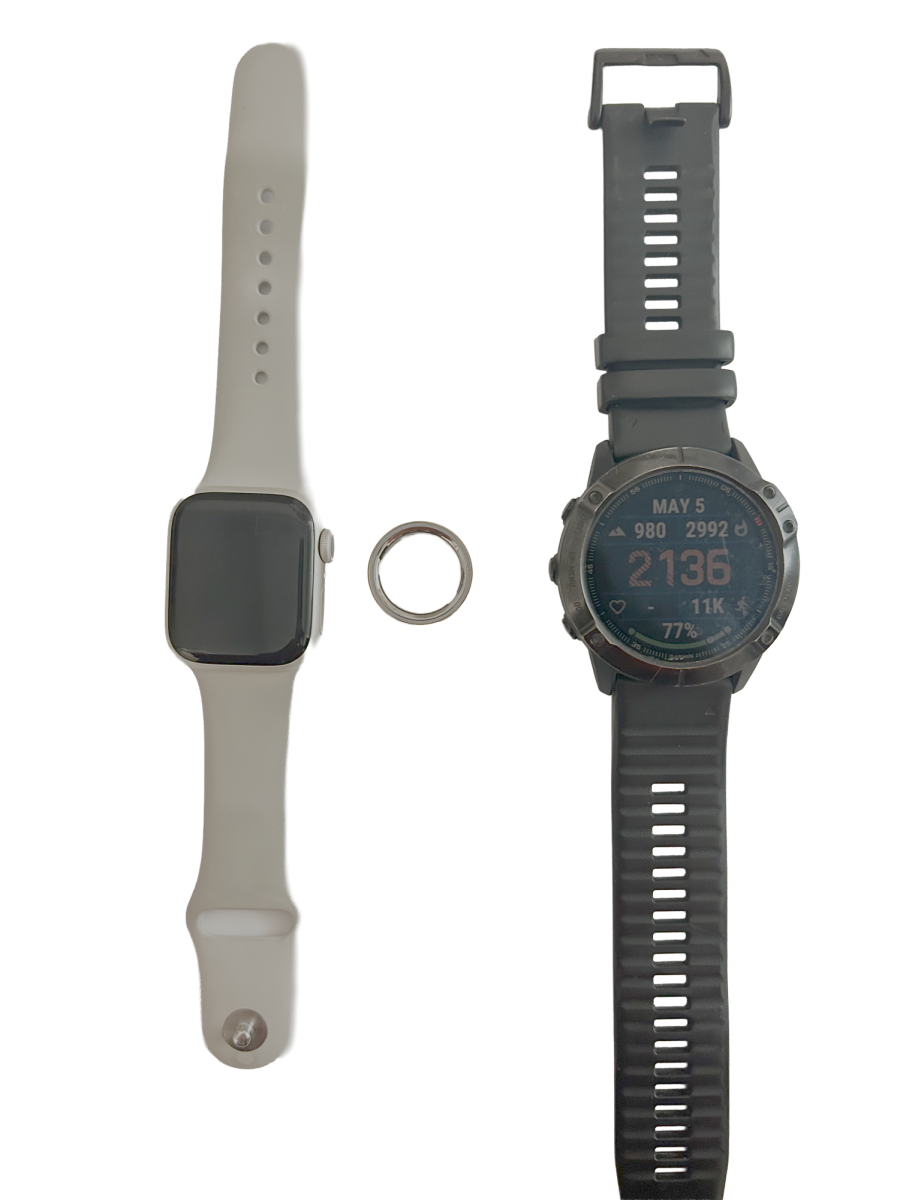
Watches are no longer just used for time; they are now used to track daily health and activities.
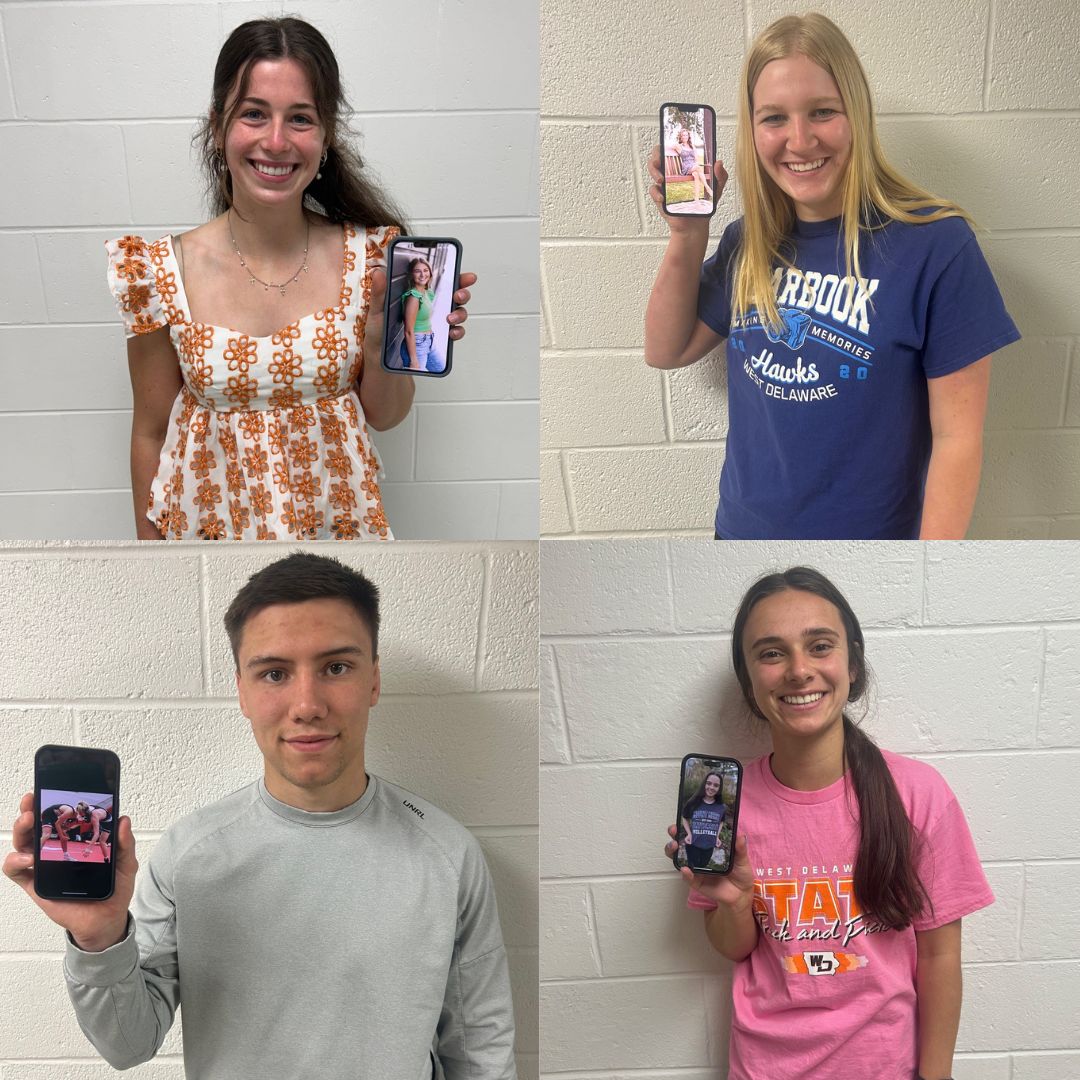
Sophomore Alivia White, a wrestler and cross-country runner, uses a smart ring and an Apple Watch to track her daily health.
“I usually use my Apple Watch to monitor my workouts,” White said.
To track her sleep and daily life, she uses her smart ring, which can last around five days on a single charge.
“It checks my sleep, my heartbeat, my blood oxygen level, and my steps,” White said. “You can do different workouts on it.”
While she can check her stats on her Apple Watch instantly, she has to open an app to see her ring.
Junior Maryn Hoefer enjoys using her Garmin Watch.
“My Garmin Watch helps me in my daily life by tracking my steps,” Hoefer said.
She has a 10,000-step goal per day.
“I usually reach it every single day, and if I don’t, it’ll give me reminders to get up and move,” Hoefer said.
Kinley Welcher (10) uses an Apple Watch to track herself during her cross-country and soccer seasons.
“My Apple Watch has helped me track my times when I’m running and how many calories I burn at practice,” Welcher said.
Hoefer likes that her Garmin Watch has a lot more benefits than her previous Apple Watch did.
“It was a little bit more expensive than my Apple Watch, but it does a lot more than what my Apple Watch did,” Hoefer said. “So it wasn’t that much more.”
The charge of her Garmin Watch can last up to eight days longer than her Apple Watch, is more in-depth in tracking her daily health, and has a more detailed and accurate GPS.
Hoefer wasn’t the only one who thought about the cost. White decided to save money and buy a ring similar to the Oura Ring.
“I got a knockoff brand from Amazon since the Oura Ring costs around $500, and then you have to pay for the monthly subscription,” White said. “I don’t have to pay for the subscription, so mine was about 70 bucks total.”
White enjoys her ring because she thinks it is a cute alternative.
“It makes me feel like an athletic, cute girly,” White said. “And, it’s fun knowing my ring is always tracking me.”
Welcher likes using the workout features to track herself during practice.
“My fitness app connects to my phone so I’m able to track my fitness through both my phone and my Apple Watch,” Welcher said.
Welcher tracks her steps, heart rate, distance, mile pace, and more.
While there are mostly positives, Hoefer has one dislike about her watch.
“I’d say a con of my Garmin is that I can’t text people back, because it just doesn’t have that feature,” Hoefer said. “But I can still read the text messages, which is fine for me.”
Welcher wishes her watch could accurately record her runs.
“Sometimes, when I’m on my run, it won’t track because it doesn’t think I’m on a run,” Welcher said.
Hoefer uses her watch for her cross-country and soccer seasons because it tracks accurately compared to the Apple Watch.
“I like to use it when I go on my walks as well,” Hoefer said.
Her watch tracks her body percentage, steps, stress levels, and naps. Warnings can include telling her she needs to breathe or telling her the environment is too loud.
“It tells me to take a deep breath because it tells me when I’m stressed. If I’m taking a test, afterwards, it’ll tell me that I had a long, stressful period,” Hoefer said.
She uses the information for her next tests, breathing more often to ensure she is calmer.
“Wearing a watch is important because it helps you have more awareness in your daily life,” Hoefer said. “By constantly monitoring your activity levels and health stats, it also gives you a clear picture of your progress toward a more active lifestyle.”